Back
Knowt: Designing a streak system that makes students come back every day
Knowt turns notes into quizzes, but users weren't building a daily habit. I designed a streak and rewards system in 4 days to give students a reason to open the app every morning.
My Role
Product Designer (sole designer, 4-day sprint)
Timeline
4 Days
Team
Solo. Just me.
The Problem
Knowt is good at one thing: turning your notes into quizzes. You paste in your study material, it generates flashcards and practice questions, and the learning part works. But once students finished a study session, there was nothing pulling them back.
No streaks, no progress tracking, no reward for showing up two days in a row. The app treated every session like a one-off. For a study tool, that's a problem, because the whole point of learning is repetition over time.
Competitors like Duolingo had figured this out years ago. Their streak system drives a huge chunk of daily active usage. Knowt had nothing equivalent.
What I set out to do
I had 4 days. The goal was specific: design a streak and rewards system that gives students a reason to open Knowt daily, without turning the app into a game at the expense of actual studying.
That second part mattered. Duolingo's streak works, but it leans hard on loss aversion. Miss a day and you feel punished. I wanted something that felt encouraging instead of guilt-driven. The streak should reward consistency.
Competitor Research
What Duolingo gets right (and what I'd change)
I spent the first half-day pulling apart Duolingo's retention mechanics. Here's what I found:
A day counter that tracks consecutive days
Milestone celebrations at 7/30/100/365 days
Streak freezes you can buy to protect your streak when you miss a day
What makes it work is the visual feedback loop. Every time you complete a lesson, the streak counter updates with animation. Hit a milestone, you get a celebration screen. The app is constantly telling you "keep going."
What I didn't want to copy: the guilt. Duolingo sends aggressive push notifications when your streak is about to break. "These reminders seem passive aggressive" is a real user review. The streak freeze and repair features exist because users feel so bad about breaking streaks that Duolingo can charge them to fix it. That's effective, but it's not the relationship I wanted Knowt to have with students.
My takeaway: borrow the mechanics (counter, milestones, visual progress), but build them around positive reinforcement instead of loss aversion.
Design Decisions
Dashboard
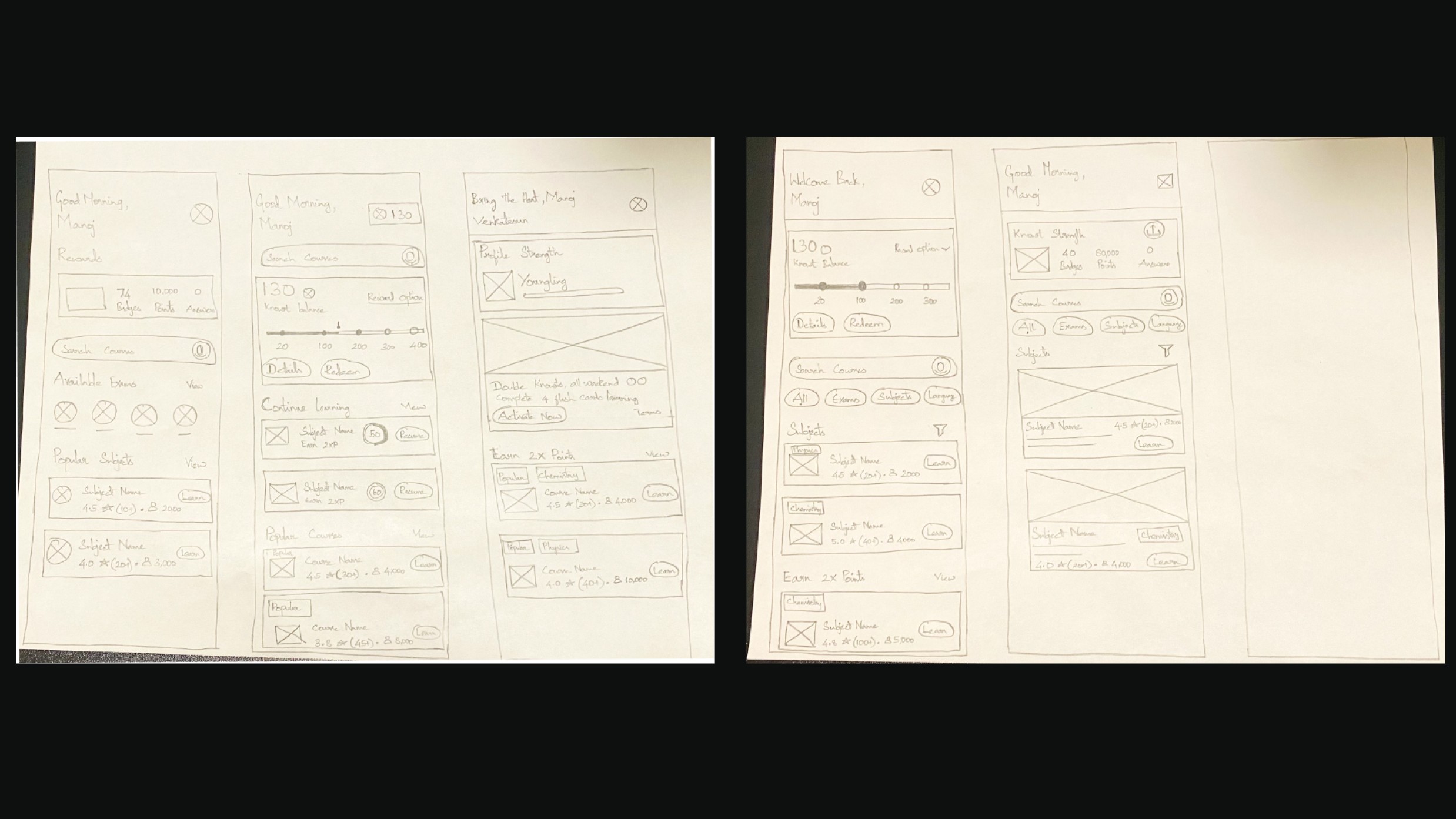
The first question I asked was: when a student opens Knowt, what should they see first? The old dashboard showed your courses and that was it. No reason to feel like today was different from yesterday.
I added three things, each tied back to the streak goal.
A "Continue Learning" section right at the top. This reduces the friction of starting a session. The hardest part of a streak is deciding to begin each day, so I put your most recent course front and center with a single tap to resume.
A profile strength indicator on the avatar. It's a circular progress ring that fills as you study, complete streaks, and earn rewards. I borrowed this pattern from LinkedIn's profile completion bar. It creates an open loop: you see it's not full, and you want to close the gap.
A search bar. This wasn't directly about streaks, but the research showed students with more courses stayed active longer. Making it easier to discover and add courses feeds the streak indirectly.
Course Detail
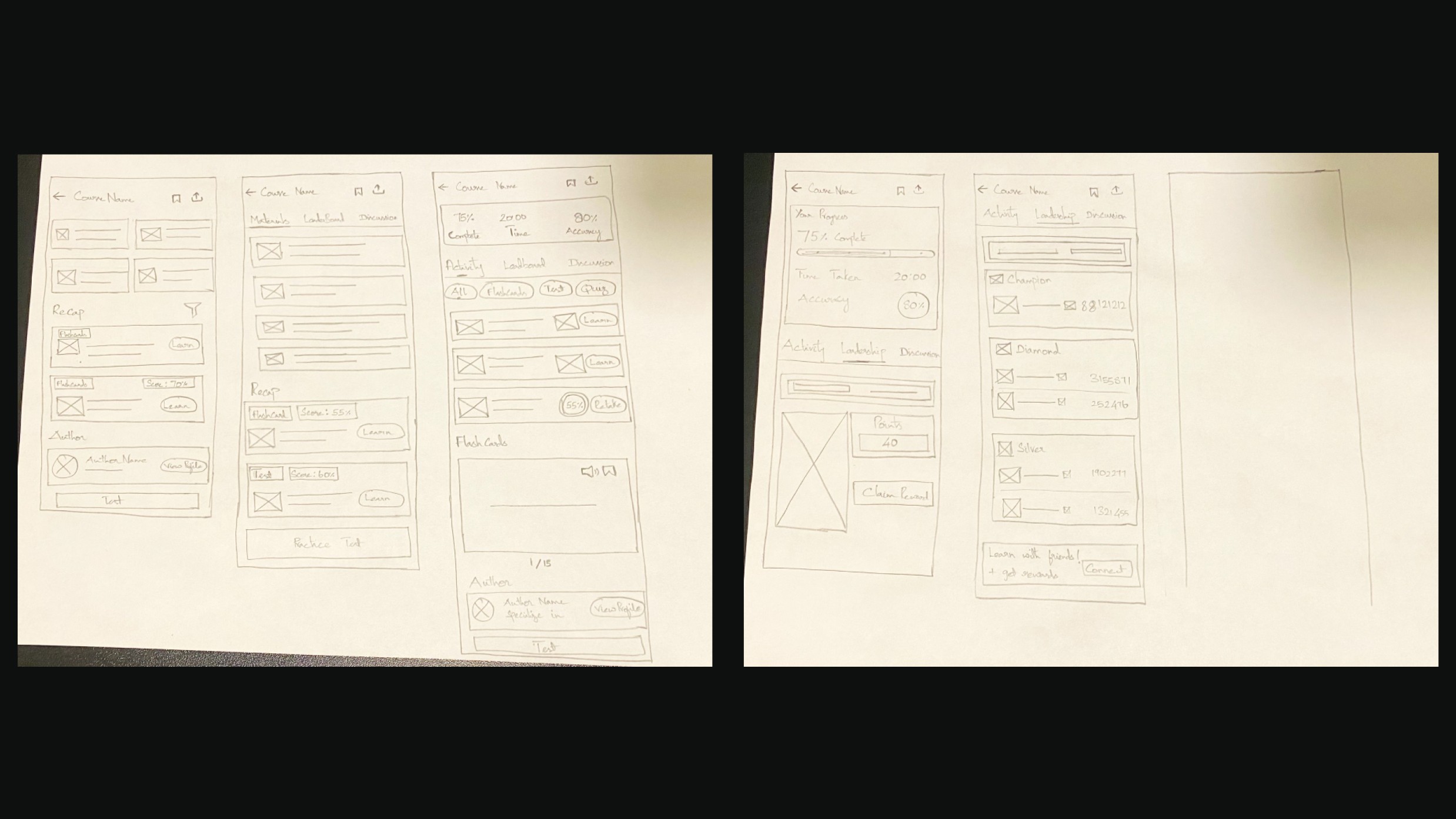
Once a student taps into a course, I needed this screen to do two things: show progress toward a tangible reward and make the streak feel present without being annoying.
The "Knowt Balance" bar sits at the top of every course screen. It fills as you complete quizzes and maintain your streak. When it reaches certain thresholds, you earn rewards (avatar customizations, theme unlocks, streak freezes). I chose rewards that don't cost Knowt anything to give but feel meaningful to students who use the app daily.
Below that, each quiz card shows a fire icon for streak days and a star for completed quizzes. These are small, but they give the course page a sense of life. Yesterday it looked one way, today it looks slightly different because you studied. That visual change is what makes people come back.
Earning Reward
I designed the reward flow as a three-part sequence: earn, see progress, claim.
When you complete a quiz or maintain your streak, the Knowt Balance bar updates with a small animation. This is the "earn" moment. You can see your balance growing in real time.
At set milestones (50, 100, 250, 500 points), a reward becomes available. I tested a few ideas for what the reward screen should feel like. I wanted it to feel like opening a gift. Students should feel rewarded, not like they're playing.
The rewards themselves are cosmetic: profile badges, streak shields, custom themes. I intentionally avoided anything that would create pay-to-win dynamics or undermine the learning experience.

Final Screen
Dashboard screen
The final dashboard puts the streak front and center. At the top, your streak count with a fire icon and the number of consecutive days. Below that, "Continue Learning" shows your most recent course with a progress bar. The profile avatar in the corner has the strength indicator ring.
The visual hierarchy is deliberate: streak first (motivation), then continue learning (action), then courses (browse). The goal is to get someone from "I opened the app" to "I'm studying" in one tap.
Course detail screen
The course detail screen shows the Knowt Balance bar at the top, your streak status, and a list of quizzes with completion indicators. Each quiz card shows how many questions it has, your last score, and whether it counts toward your streak today.
I kept the layout simple on purpose. This is a study tool, not a game. The streak and reward elements are present but they don't compete with the content.
Progress indicator section
The progress indicator appears in two places: on the course detail page (as a ring around your profile) and as a standalone progress screen accessible from your profile.
Notification: Streak Boosting
Notifications were the most deliberate design choice in the whole project. I mentioned earlier that I didn't want to copy Duolingo's guilt-driven approach. Here's what I did instead.
The streak booster notification fires once per day, in the morning. It says something like "You're on a 5-day streak. Keep it going today?"
If a student misses a day, the notification doesn't guilt them. It says "Welcome back. Pick up where you left off." No loss framing. No countdown. Just an invitation.
I designed three notification states: streak active (positive reinforcement), streak paused (neutral, no judgment), and milestone reached (celebration). Each has a different visual treatment so students learn to associate the notification tone with how the app feels about them, which should always be supportive.
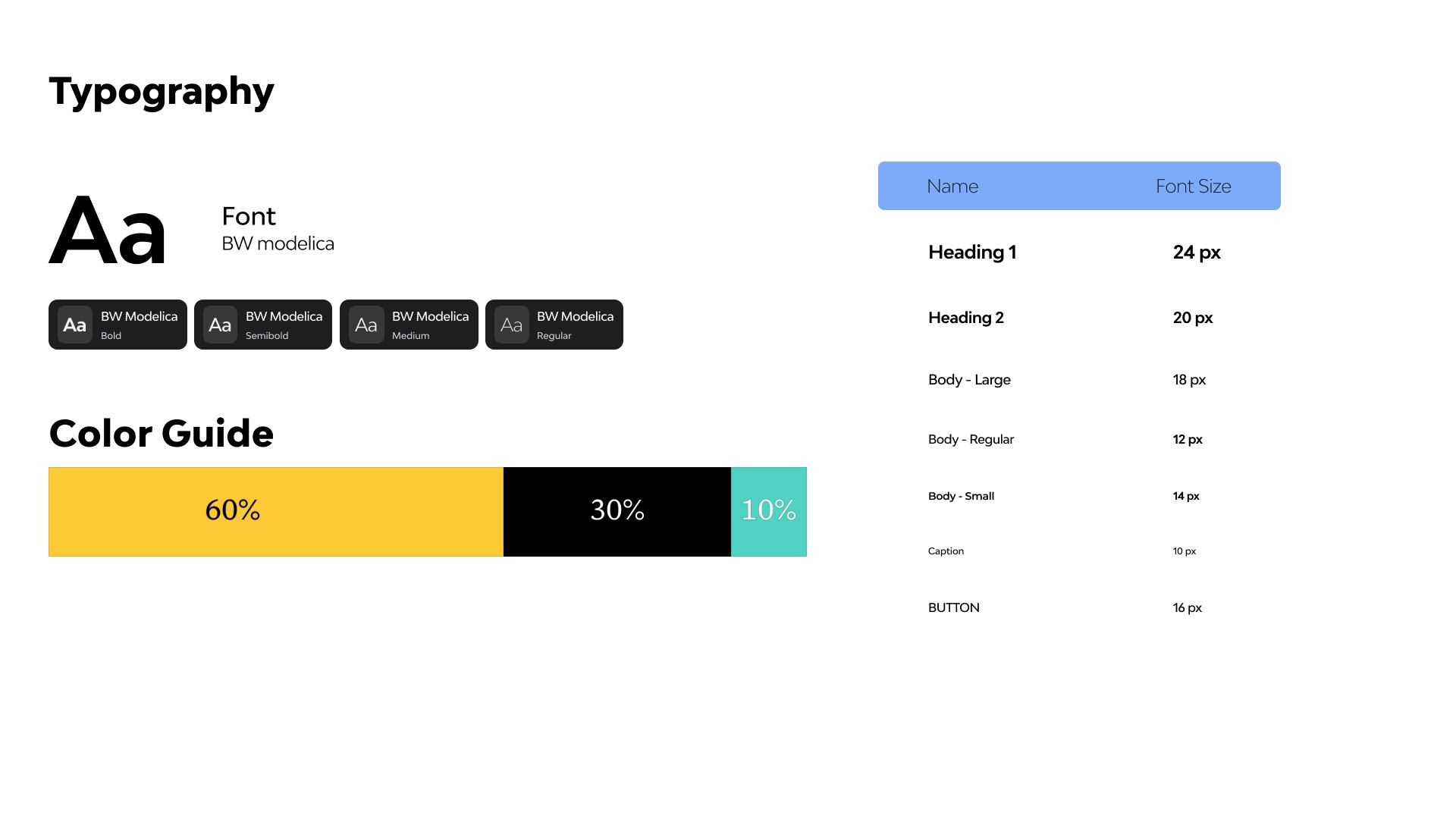
Design System
I built this component library during the sprint so that the streak and reward elements would stay visually consistent across all screens. The fire icon, progress rings, and reward badges all follow the same 4px grid.
Results and Impact
Results
8 screens, a component library, a notification framework, and a reward system, all built solo in 4 days.
Duolingo’s streak data shows features like this account for around 50% of their daily active usage. Based on that, a streak system could lift Knowt’s daily return rate by 20-30%.
The hiring team responded well to the design during my interview.
What I learned
The biggest trap in a short sprint is trying to design everything. I cut hard: no social features, no AI personalization, no leaderboards. Just the core loop, study, earn, see progress, come back.
If I’d gone broader, none of it would have been done well. Knowing what to leave out was probably the most important decision I made.
If I had more time
Three things I’d explore.
Social streaks, where friends can see each other’s progress and study together.
An adaptive difficulty system that adjusts quiz length based on streak length, so longer streaks come with harder challenges automatically.
A proper 2-week retention study to check whether the streak actually changes behavior or just adds visual noise.
What I’d do differently
Four days isn’t much. I focused on the streak and rewards system because that was the brief, but there were two things I kept thinking about that didn’t make it in.
First, a tutor booking flow. When a student hits a wall on a concept, they shouldn’t have to leave the app to find help. Booking a call with a subject expert from inside the course detail page would close that gap in a way the streak system alone can’t.
Second, AI. Knowt already converts notes into quizzes. The next step is letting students upload their own coursework, get feedback on it, generate a quiz from it, or just ask questions about it. That’s a different kind of useful from what’s there now.
Also, the course detail page. It works, but looking at it now it feels packed. I’d want to loosen it up and make it easier to move through.